Thursday, September 3, 2015

Five School Trouble Spots to Stay on Top Of- great list to be aware of

Good article and list of times in our kids day,that  have the potential to create stress and anxiety. Always important to try to be proactive and be as prepared and supported in those areas that could be issues, have a look and ask those questions, they are good.
_____________________________________________________________


Getting your child an appropriate educational program is hard enough. But even if you've dotted every "i" and crossed every "t" on the IEP, or chatted up every teacher on your child's strengths and weaknesses, there will still be times during the school day when all those helps fall down a hole. Periods like recess and lunch and gym and locales like restrooms and buses are hard for most schoolkids -- there are volumes of children's literature devoted to them.But for kids with special needs, those youthful rites of passage can be downright dangerous.
  1. For each trouble spot, you'll want to ask these questions:
    1. Where does my child do this activity?
    2. How long does it last?
    3. Which other students are there with my child?
    4. What supervision is provided?
    5. How structured is this activity?
    6. Who resolves disputes?
    7. What happens if my child misbehaves?
    8. Are any special-education personnel with my child?
    9. Is anyone able to adapt activities so that my child can participate?
    10. Who can my child ask for help?
Trouble Spot #1 - Recess:
Recess is a danger zone for plenty of kids -- it's highly unstructured and unsupervised by design, and the law of the jungle often takes over. Your child will be particularly vulnerable if he or she requires structure and supervision, has trouble with social contacts or physical activities, tires easily, or is affected by temperatures and air quality. If there are problems, ask the school to assign an aide or a student buddy who can make recess safe and successful for your child.
Trouble Spot #2 - Lunch:
Schools are cutting lunchtimes short to make sure kids only have time for eating, but lunchrooms can still be havens of hurtful and unhealthful activity. Your child will be particularly vulnerable if he or she has special dietary needs, health problems that require mealtime accommodations, a need for structure and supervision, or trouble with social contacts. If there are problems, ask the school to assign an aide for supervision or assistance.
Trouble Spot #3 - Gym:
Physical education is an unforgiving subject for children who, whether due to gross motor problems, sensory integration dysfunction, or health issues can't get with the athletic program. Your child will be particularly vulnerable if he or she has physical limitations, needs supervision, overreacts to noise, or has a poor sense of pain and danger. If there are problems, ask if your school has Adapted Physical Education to provide an appropriate program, or if an aide can give needed help.
Trouble Spot #4 - Restrooms:
Whether your child is tormented by classmates, makes a mess himself, or just gets too distracted to emerge on time, those little rest stops can mean big trouble. Your child will be particularly vulnerable if he or she needs help or supervision, makes inappropriate social contacts, or is easily led. If there are problems, ask to have your child use the restroom in the nurse's office instead of the public restroom. This will provide for discrete supervision and assistance as needed.
Trouble Spot #5 - Buses:
Your child can be particularly vulnerable if he or she has health or developmental issues that attract attention, needs constant supervision, is overstimulated by loud noises, or makes inappropriate social contacts. If there are problems, ask the district to provide a safer ride -- create social stories, a system of support with a rotating bus buddy. Let them take music with earphones to tune out the loudness, fidget toys, that are specific to the bus. 

Thursday, August 27, 2015

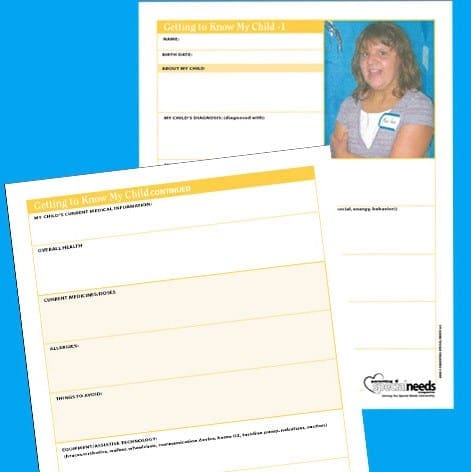
Another back to school tip "cheat sheet about my Child"

I had posted this link a while ago, as they have been posting everyday, a new 'tip'  but I really like this idea. Many of us, are getting back into the swing of school, and needing to update information for the new EA's and Teachers who will be working with our sons & daughters. This is a great tip, that can offer information, that will stay with the child/youth, throughtout the year, allowing any new Teachers or substitutes a great resource to 'know' our kids. Link to the form at the bottom of the article.

________________________________________________


A Teacher’s Cheat Sheet about My Child {Tip18-31}

A new children’s fairytale teaches children about Down syndrome

This looks like a great new book to teach how we all belong, no matter what we look or act like. Looks like a beautifully done book, with a very important message. Worth picking up when it's released in a few days. 

____________________________________________________________________________

A new children’s fairytale teaches children about Down syndrome and demonstrates how great it is to live in a world where everyone looks and acts differently from one another.
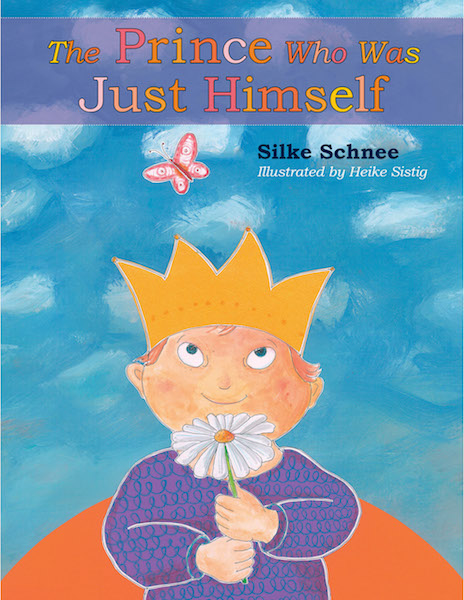
Prince cover-hi-res

Written by Silke Schnee and illustrated by Heike Sistig, “The Prince Who Was Just Himself” tells the story of a king and queen who are anticipating the arrival of their third child. But when Prince Noah is born with Down syndrome, the royal couple are unsure of what to make of him.
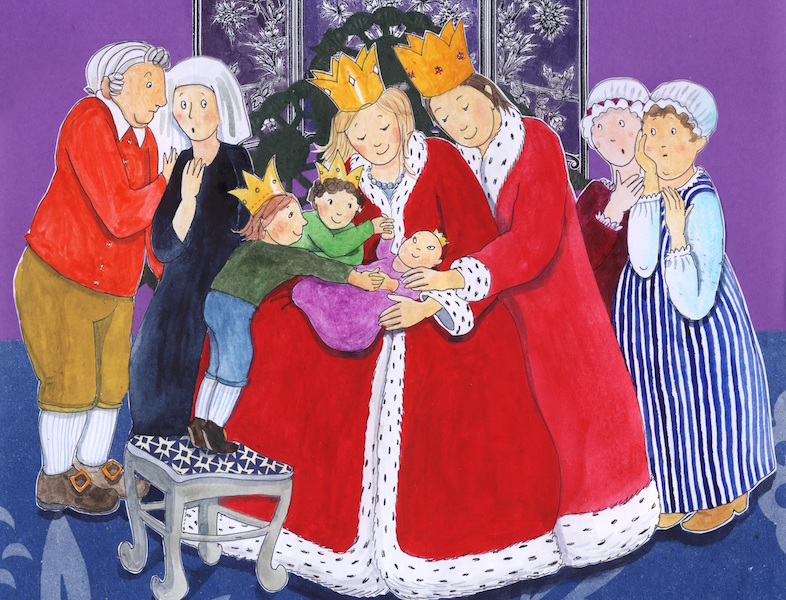
He looks a little different,” the king says as he lays eyes on his child for the first time.
“He’s not like the others,” the queen agrees.
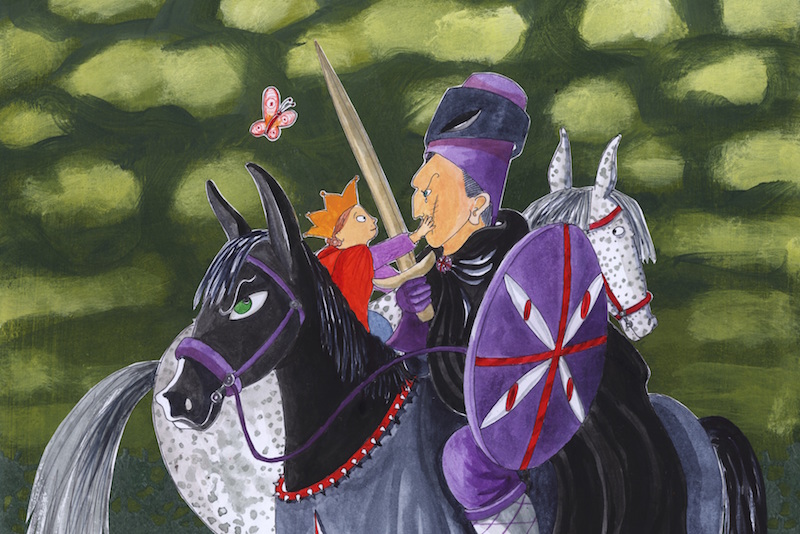
Though Noah doesn’t have the same abilities as his brothers, his parents soon realize how wonderful he is in his own way. And when the new prince defeats the kingdom’s worst enemy with a simple act of kindness, everyone else sees it, too.
Prince Noah is based on Schnee’s son, also named Noah, who was born with Down syndrome. At first, Schnee and her husband were shocked and saddened by Noah’s diagnosis. But those feelings vanished when they saw how much joy Noah would bring to the family.
“The catalyst for this book was witnessing the effect [our son] had on many people, despite being categorized as disabled,” Schnee, who lives in Cologne, Germany with her family, wrote in her biography at the end of the book. “In fact, our little prince brings much love, joy and sunshine not only to us, but to all around him.”
Take a look at some of the illustrations from the fairy tale below.
family
scarface
tree

“The Prince Who Was Just Himself” is currently available for pre-order on Amazon and will be available in bookstores in the U.S. on September 1.
Photos courtesy of Plough Publishing.

Read more: http://themighty.com/2015/08/how-this-new-fairytale-is-teaching-kids-about-down-syndrome1/#ixzz3k2yXQ2Ry


Monday, August 24, 2015

TED talk about Faith's extraordinary brothers


Thank you Faith, what a moving talk about your brothers. There are always, always lessons to be learned. It certainly is about recognizing each other's individuality, our form and means of communication and the basis of all is love. All around us, we are hearing the message about celebrating each others differences- when that becomes the 'norm' think of how seamlessly inclusive our homes, communities, villages, and world will be for All. 

_______________________________________________________________________

Faith Jegede tells the moving and funny story of growing up with her two brothers, both autistic -- and both extraordinary. In this talk from the TED Talent Search, she reminds us to pursue a life beyond what is normal.


Back to school tips for children with SPD- great information

Great article once again, from 'The Pocket OT', she's got some great points, in the article and super suggestions to address the sensory needs that our loved ones may need  for successful learning environments. She does a great job talking about Sensory Processing disorders, and what challenges they can create for our sons & daughters. There are some really great suggestions for handwriting, sensory activities for school, and some organizational ideas, that will certainly help create a environment that addresses sensory issues, feedback needed and a structured environment to reduce extra stress load. Well done. Please click on the link to read the article,  I can't seem to edit it nicely into the blog. :) 

_________________________________________________________________________

Click on the link to read the article.